
NEWS
NHRC Urges Legislators to Mainstream Human Rights in Lawmaking.

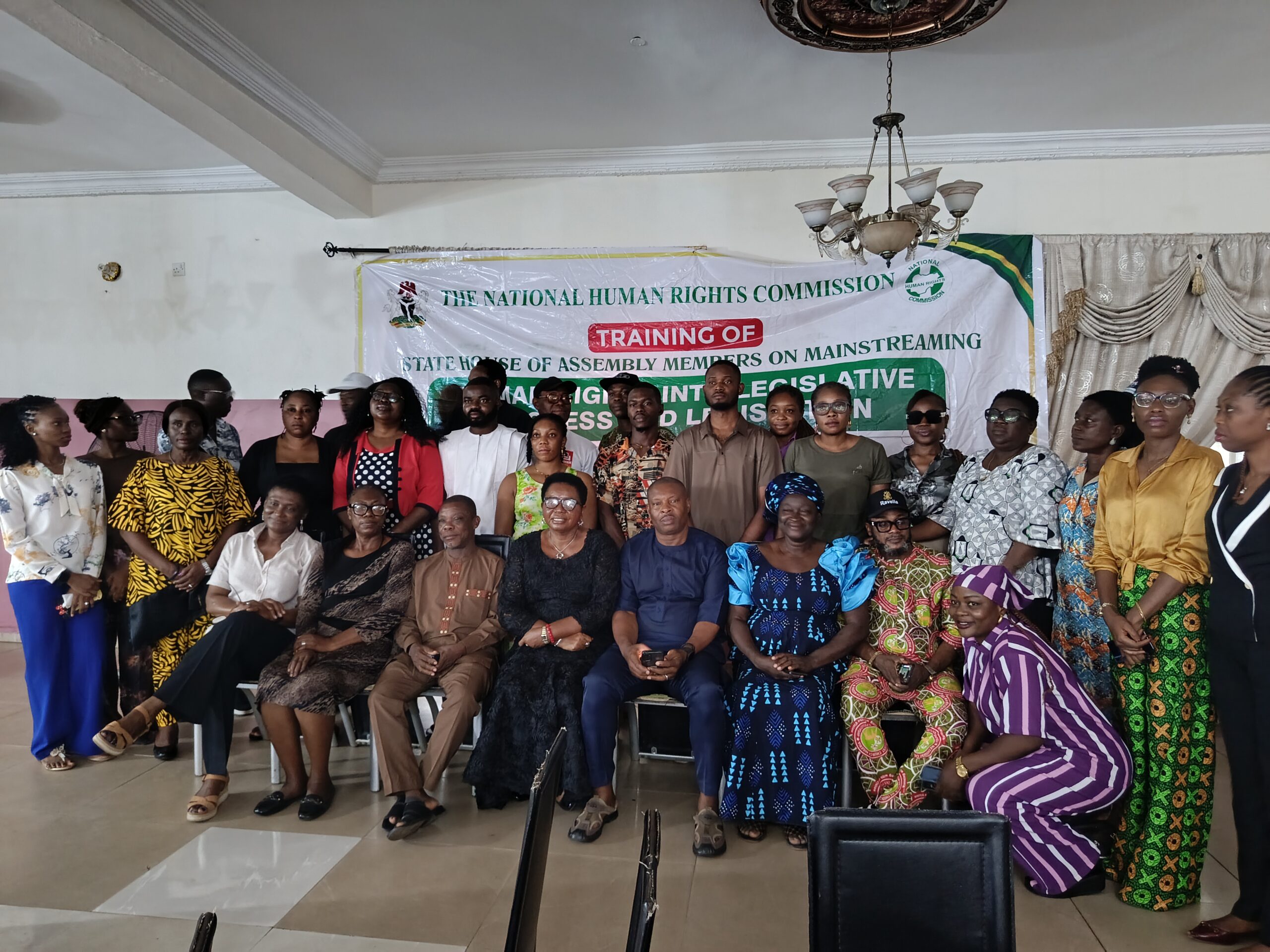
NHRC Urges Legislators to Mainstream Human Rights in Lawmaking.
The National Human Rights Commission (NHRC) has urged legislators to mainstream human rights and Human Rights Impact Assessment (HRIA) into every stage of the legislative process to ensure that laws enacted in Nigeria are just, inclusive and responsive to the needs of the people.

The Executive Secretary of the Commission, Tony Ojukwu, SAN, made the call during a one-day training for legislators on “Mainstreaming Human Rights and Human Rights Impact Assessment into the Legislative Process and Legislation” held at Bishop Anthony Nwedo Pastoral Centre, Umuahia.
Ojukwu represented by Barr Uche Nwokocha said the training, organised by the NHRC, was aimed at strengthening collaboration between the Commission and legislative institutions while equipping lawmakers with practical tools for incorporating human rights considerations into lawmaking.

He commended the Speaker and members of the House for participating in the programme, describing their presence as an indication of their commitment to strengthening democratic governance and protecting the dignity, rights and freedoms of citizens.
According to him, the quality of democracy should be measured not only by the number of laws passed but also by the quality, inclusiveness and human rights compliance of such laws.
He noted that legislation affects critical areas of citizens’ lives, including access to justice, education, healthcare, housing, security, livelihoods and civic participation. He therefore called for rigorous scrutiny of every bill before it is enacted into law.
The NHRC Executive Secretary observed that legislative processes were sometimes conducted under tight time constraints, with inadequate empirical evidence, limited human rights analysis and insufficient engagement with affected communities.
He also stressed the need for public hearings to move beyond mere procedural requirements, saying citizens, experts, professional bodies, civil society organisations and affected communities should have meaningful opportunities to contribute to lawmaking.
Ojukwu warned that laws enacted without adequate consultation and human rights analysis could result in unintended consequences, constitutional challenges, litigation and public distrust.
He advocated the institutionalisation of Human Rights Impact Assessment as a practical tool for improving the quality of legislation. According to him, HRIA can help lawmakers identify potential human rights violations before a bill becomes law and determine how proposed legislation may affect vulnerable groups, including women, children, persons with disabilities, older persons, internally displaced persons and other marginalised communities.
He explained that HRIA should not be regarded as an additional bureaucratic hurdle, but as a decision-making mechanism that enables legislators to anticipate the legal and social consequences of proposed laws.
The Executive Secretary said mainstreaming human rights should cover the entire legislative process, from policy formulation and bill drafting to committee consideration, public hearings, debate, enactment, oversight and post-legislative review.
He further assured legislators that the NHRC was committed to working with the National Assembly, State Houses of Assembly and other relevant institutions to promote rights-based governance.
“Our objective is not to interfere with the legislative mandate, but to support lawmakers in fulfilling their constitutional responsibility to enact laws that are fair, just, inclusive, and fully compliant with national, regional and international human rights standards,” he said.
Ojukwu urged participants to use the training to explore practical ways of institutionalising HRIA within legislative procedures and standing orders.
He said the ultimate measure of a legislature was not the number of bills it passed, but the positive impact of its laws on the lives of citizens.
He called on legislators to ensure that every legislative decision answers critical questions about its impact on the rights and dignity of the people, particularly those who may be vulnerable or marginalised.
The NHRC boss expressed hope that the training would deepen legislators’ understanding of Human Rights Impact Assessment and inspire reforms that would improve the quality of legislation, strengthen democracy, advance social justice and restore public confidence in democratic institutions.