
NEWS
SHRE-NEPWHAN pushes for stronger malaria services in Abia as CLM Evidence Exposes Gaps in Testing and Access

SHRE-NEPWHAN pushes for stronger malaria services in Abia as CLM Evidence Exposes Gaps in Testing and Access
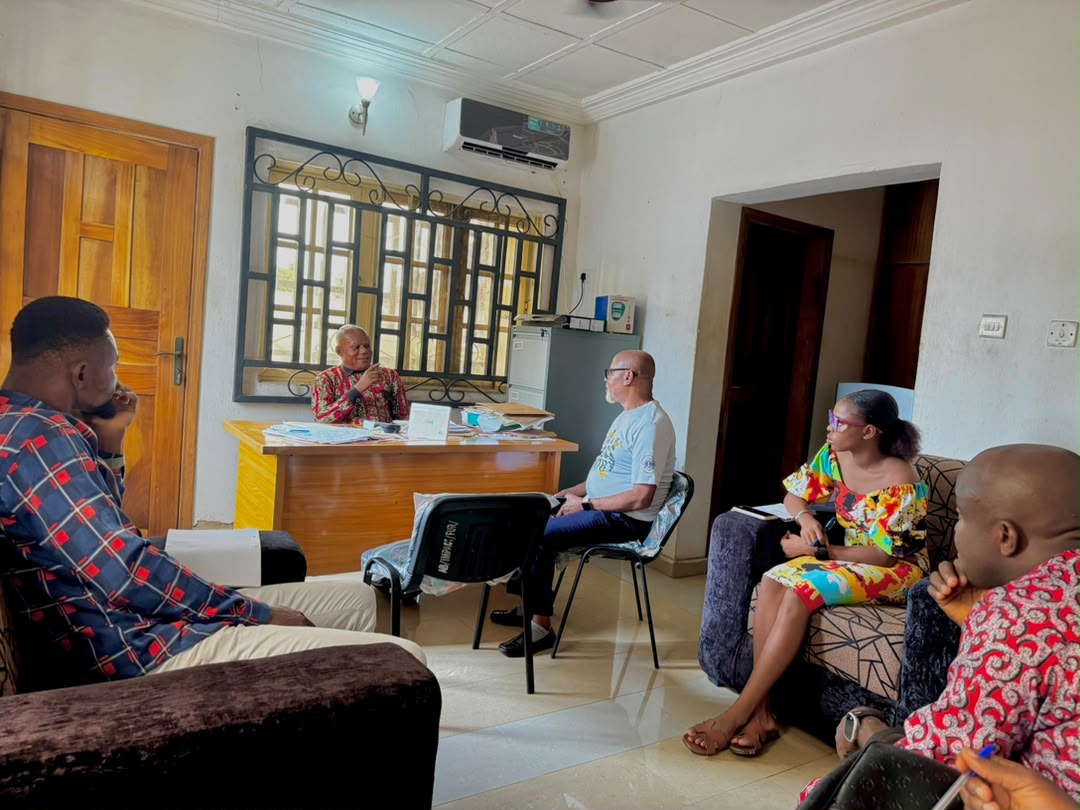
On 11 September 2026,the State Advocacy Team, comprising the Program Team of Synergy for Health Rights and Education (SHRE), the Abia State Programs, Monitoring & Evaluation Officer of the Network of People Living with HIV and AIDS in Nigeria (NEPWHAN), the State Coordinator of ACOMIN, and the media, conducted an advocacy visit to the State Programme Manager for Malaria, Mr Arua Obasi.
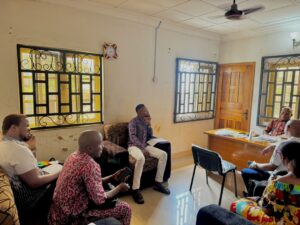
The visit was facilitated by SHRE under the Global Fund-supported GC7 Community-Led Monitoring (CLM) project, in collaboration with NEPWHAN.
The engagement provided an opportunity to present and discuss key findings emerging from CLM implementation, particularly gaps relating to malaria service availability, accessibility, quality, and continuity of care across selected health facilities in Abia State. The findings are intended to strengthen evidence-based stakeholder engagement, advocacy, accountability, and appropriate programmatic interventions.
In his remarks, the NEPWHAN State Programs, Monitoring & Evaluation Officer, Chief Whyte Ikocha, explained that the CLM project focuses on identifying service delivery gaps and challenges across the three priority disease areas—HIV, tuberculosis, and malaria. He noted that evidence generated through community-led monitoring provides an important basis for engaging relevant stakeholders, promoting accountability, and advocating for improvements in health service delivery.
He further reiterated the importance of sustained collaboration among government, implementing partners, civil society, and community-led structures towards strengthening the health sector and ensuring that community concerns are translated into meaningful improvements in service delivery across Abia State.
SHRE Program Officer, Franklyn Onyebuchi, disclosed that SHRE conducts CLM activities across 10 health facilities every quarter.
He highlighted key malaria-related issues identified during the reporting period, including out-of-pocket payments for malaria testing and treatment at tertiary health facilities, while malaria services are provided free of charge at supported Primary Healthcare Centres (PHCs).
He questioned why free malaria interventions are currently concentrated at the PHC level and called for consideration of extending such interventions to tertiary health facilities to promote seamless, equitable, and affordable access to malaria prevention, testing, and treatment services across the different levels of healthcare.
Franklyn also raised concerns about reports of inaccurate malaria test results from some health facilities, particularly cases where patients presenting with malaria-like symptoms reportedly received negative test results. He stressed the importance of ensuring that malaria diagnostic services are properly administered and interpreted, particularly given the continuing burden of malaria in the state.
He reiterated the need to strengthen and expand malaria interventions beyond PHCs while appreciating the Abia State Government for the efforts and progress recorded in combating malaria across the state.
Responding to the concerns, the State Programme Manager for Malaria, Mr Arua Obasi, disclosed that 294 Primary Healthcare Centres were initially supported under the malaria intervention and were subsequently scaled up by an additional 294 PHCs, bringing the total number of supported PHCs to 588 across the state.
He explained that the intervention is currently donor-dependent, which is a major reason its implementation has primarily focused on PHCs. Mr Obasi further noted that through the IMPACT project, malaria commodities have been supplied to supported PHCs free of charge.
However, he expressed concern over gaps in the manner in which some healthcare workers administer and interpret malaria test results. He explained that poor adherence to diagnostic procedures, coupled with the widespread assumption that “every fever is malaria,” presents a significant challenge to accurate diagnosis and appropriate treatment.
He warned that treating patients for malaria despite negative Rapid Diagnostic Test (RDT) results, based solely on the assumption that fever is caused by malaria, could undermine appropriate case management. He emphasised the importance of proper testing and accurate interpretation of results to ensure that patients receive appropriate and evidence-based care.
The State Programme Manager committed to ensuring that healthcare providers, particularly Officers-in-Charge (OICs) at the different PHCs where the interventions are being implemented, are provided with opportunities for continuous training and capacity building. He noted that strengthening the knowledge and skills of frontline healthcare workers would improve adherence to appropriate malaria diagnostic and treatment procedures and ultimately contribute to better patient outcomes.
Mr Obasi also appealed to the state government and other health sector stakeholders to increase investments and support for malaria testing, noting that malaria diagnostic tests are effective when properly administered and interpreted.
The engagement concluded with a shared commitment to strengthen collaboration between the State Malaria Programme, CLM actors, and other relevant stakeholders to ensure that identified service delivery gaps are addressed through evidence-informed action.
The team emphasised the need for communities across Abia State to have improved access to quality, equitable, responsive, and affordable malaria prevention, diagnosis, treatment, and care services, irrespective of the level of health facility where services are sought.
Mr Obasi appreciated the team for its commitment and dedication to community-led monitoring and acknowledged the importance of evidence generated through the CLM process in identifying service delivery challenges and informing health sector improvement.