
NEWS
Onuigbo Calls for Immediate Enforcement of Local Government Autonomy at South East Summit

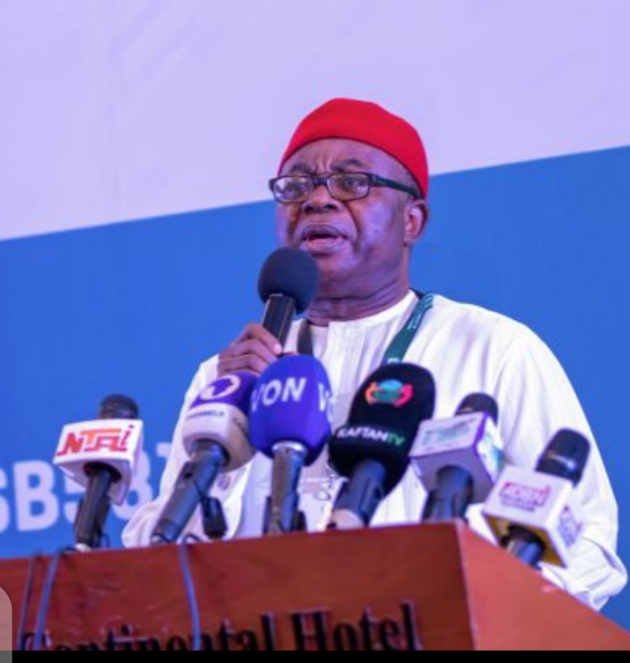
Onuigbo Calls for Immediate Enforcement of Local Government Autonomy at South East Summit
A member of the Governing Board of the North East Development Commission (NEDC), Rep. Sir Sam Onuigbo, has called for the immediate and comprehensive enforcement of financial and political autonomy for local governments across Nigeria, declaring that the time for incremental reforms has passed.
Rep. Onuigbo, who represents the South East on the NEDC Board and chairs its Committee on Security, Climate Change, and Special Interventions, made the call while presenting a goodwill message at the South East Summit on Reviving Local Governance held at the Bishop Nwaedo Pastoral Centre, BCA Road, Umuahia, Abia State.
Describing the theme of the summit as “timely and necessary,” Onuigbo said the debate over local governance strikes at the heart of Nigeria’s federal architecture and directly affects millions of citizens whose first contact with government is at the grassroots.
He reaffirmed that local government administration is constitutionally recognised as the third tier of government, “not ornamental, not subordinate, but functionally indispensable.”
Citing Section 7(1) of the 1999 Constitution, he noted that the system of local government by democratically elected councils is mandatory, not discretionary.
He further referenced Section 162, which provides for the distribution of revenue from the Federation Account to federal, state and local governments, as well as the establishment of the State, Local Government Joint Account.
According to him, the Fourth Schedule of the Constitution clearly outlines the responsibilities of local governments, including construction and maintenance of local roads, markets and motor parks; provision of primary healthcare; participation in primary education; registration of births, deaths and marriages; and rural development initiatives.
“The constitutional scheme is unmistakable,” he said. “Local governments are meant to serve as development engines at the grassroots, backed by statutory funding and defined responsibilities.”
Erosion of Autonomy Since 1999.
Onuigbo observed that while there was optimism about constitutional federalism, local government autonomy steadily eroded between 1999 and 2003 and beyond.
He argued that the State, Local Government Joint Account mechanism, though constitutionally recognised, became a tool for excessive state control, with allocations to councils often subjected to deductions and administrative constraints.
In many cases, he added, caretaker committees replaced democratically elected councils, undermining constitutional provisions.
The result, he said, has been deteriorating rural infrastructure, weakened service delivery and declining public confidence in local administration.
Onuigbo described the 2024 Supreme Court decision in Attorney-General of the Federation v. Attorney-General of the 36 States of the Federation as a transformative milestone.
The apex court held that funds standing to the credit of local governments in the Federation Account must be paid directly to them and that state governments lack constitutional authority to withhold or divert such funds.
He said the judgement reaffirmed constitutional supremacy and removed ambiguities surrounding local government financial autonomy.
“This ruling was not merely interpretative; it was corrective and restorative,” he stated.
Onuigbo emphasised that financial autonomy is a practical necessity for effective governance. Without direct access to statutory allocations, he argued, local governments cannot prepare credible budgets or implement sustainable development plans.
“Direct disbursement enhances transparency, strengthens accountability to the electorate and deepens participatory democracy,” he said, adding that fiscal decentralisation is essential to strengthening Nigeria’s federal system.
He linked effective local governance to employment generation, rural infrastructure development and grassroots security coordination, stressing that national challenges such as unemployment, rural poverty and insecurity cannot be addressed through centralised solutions alone.
Tinubu Administration Commended
The lawmaker commended President Bola Ahmed Tinubu for supporting the legal action that led to the Supreme Court judgement and for policy directives aimed at enforcing direct allocation to local governments.
According to him, the Federal Government’s stance demonstrates a commitment to restoring fiscal federalism at the grassroots. However, he warned that implementation remains the true test.
“Judicial pronouncements and executive directives must translate into uniform compliance across all states,” he said.
Onuigbo also called for constitutional amendments to strengthen State Independent Electoral Commissions, arguing that their underperformance has undermined grassroots democracy.
While noting that constitutional provisions were intended to shield the commissions from executive interference, he lamented that many have become “seasonal institutions,” active only during elections and often reduced to announcing predetermined results.
He urged the National Assembly to amend the Constitution to clarify and strengthen the role of these commissions to ensure that local leadership truly reflects the will of the people.
“Nigeria’s democracy will remain incomplete until local governments are both financially autonomous and democratically legitimate,” he said.
“The Nation Must Now Act”
Concluding his address, Onuigbo declared that the restoration of local government autonomy is not a concession but a constitutional obligation.
“It is not a partisan issue; it is a structural necessity. The Constitution has spoken. The Court has spoken. The nation must now act,” he said.
The South East Summit brought together political leaders, policy experts and stakeholders to deliberate on pathways for revitalising local governance and strengthening grassroots democracy in Nigeria.