
NEWS
Anyasọ Urges Bende Youths to Take Centre Stage in Development

Anyasọ Urges Bende Youths to Take Centre Stage in Development
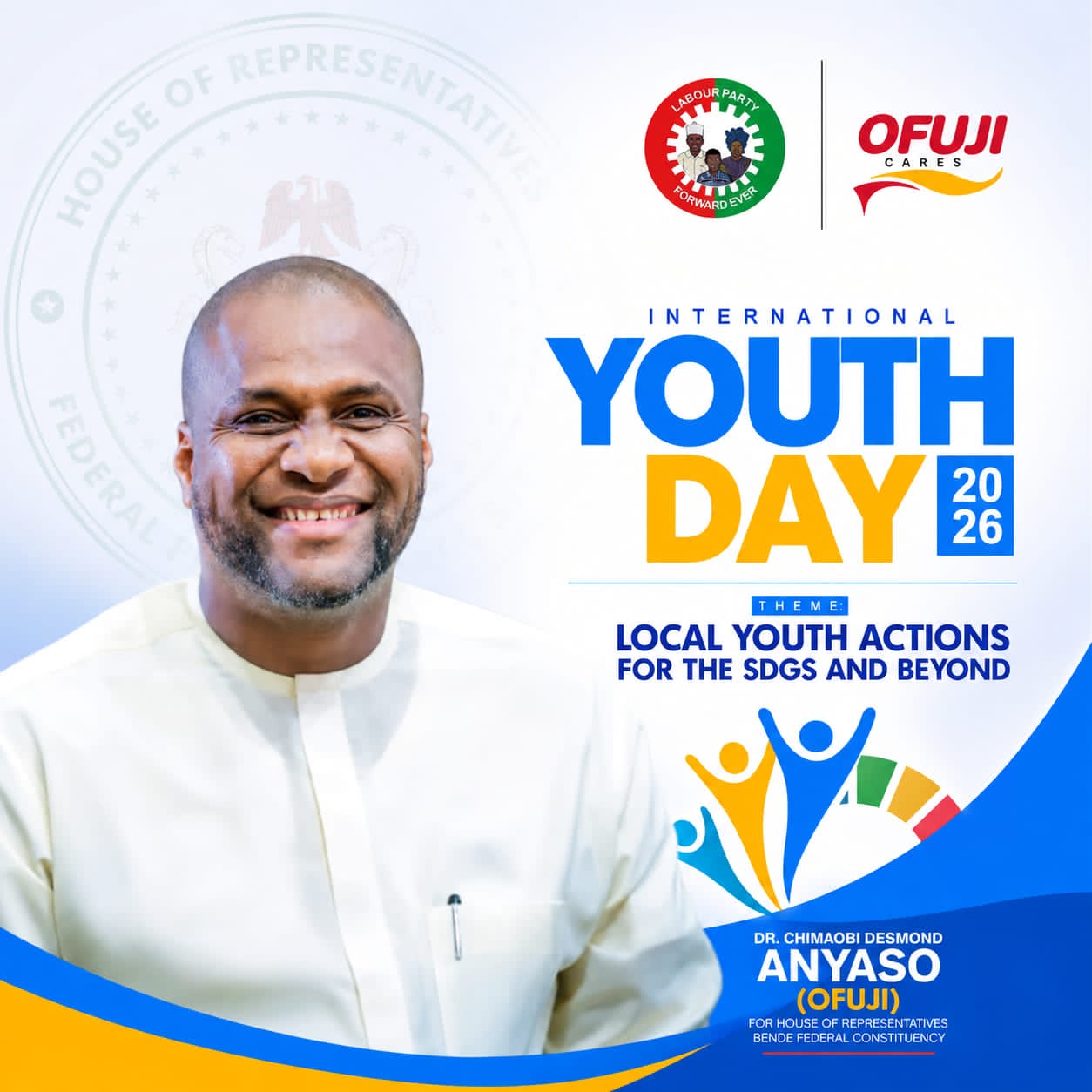
Dr. Chimaobi Desmond Anyasọ, popularly known as Ofuji, has urged youths in Bende to move from the margins of decision-making to the centre of development, saying their skills, ideas and energy are critical to the future of the community.
Anyasọ made the call in a message to Bende youths on Wednesday, August 12, to mark International Youth Day, as the global community focuses on youth unemployment, skills development and the growing impact of artificial intelligence on the future of work.
He said the occasion should go beyond celebration and serve as a reminder of the need to create practical opportunities for young people to participate meaningfully in governance, enterprise, innovation and community development.
“Bende youths, our time is now,” Anyasọ said, stressing that the future of Bende would depend largely on whether its younger generation was empowered, included and given meaningful space in decision-making.
He said youths should not be regarded merely as beneficiaries of political promises or spectators in community development, but as partners whose creativity, skills, energy and ideas must be deliberately harnessed.
According to him, “the future of Bende belongs to a generation that is empowered, included and given a seat at the table.”
The call comes against the backdrop of concerns over the global youth employment situation.
The International Labour Organisation has reported that global youth unemployment rose to 12.4 per cent in 2025, representing about 67 million young people aged 15 to 24, while more than 257 million young people were classified as not in employment, education or training.
The ILO has also warned that artificial intelligence is reshaping labour markets, potentially placing additional pressure on young people whose skills do not align with emerging opportunities, even as demand grows in fields including science, engineering, healthcare and information technology.
Against this backdrop, Anyasọ challenged Bende youths to regard the changing economic environment not only as a source of uncertainty but also as an opportunity to acquire relevant skills, participate actively and help shape the future of their communities.
He said investment in young people was an investment in the future of Bende, arguing that sustainable development would remain difficult without deliberate efforts to provide youths with relevant skills, economic opportunities and platforms for leadership.
Anyasọ further urged political leaders, traditional institutions, businesses and civil society organisations to complement the efforts of young people by creating an environment where they could access quality education, practical skills, finance, technology and decent work.
He also called on Bende youths to take responsibility for their own future by embracing emerging opportunities, developing relevant skills and remaining actively engaged in the political, economic and social affairs of their communities.
“Happy International Youth Day, Nde Bende Youths,” he said, urging them to recognise their capacity to influence the future rather than wait for the future to happen to them.
He expressed optimism that purposeful investment in the younger generation, coupled with greater inclusion in development processes, would help build a more prosperous Bende.
The message underscores the broader significance of International Youth Day for Bende, where the challenge is not simply to celebrate young people but to create measurable opportunities through which they can lead, work, innovate and contribute meaningfully to sustainable community development.